Hutton at 300: Deep Time, Siccar Point and a Lasting Legacy
This year marks the 300th anniversary of the birth of James Hutton: widely regarded as the father of modern geology. His groundbreaking ideas about deep time and a constantly changing Earth transformed how we understand our planet, and continue to underpin environmental science today.
To mark the tercentenary, the James Hutton Institute has been proud to partner with the Edinburgh Geological Society, a longstanding collaborator with close ties to Hutton’s legacy. The Society has played a leading role in the celebrations, including the hugely successful Siccar Point Deep Time Trail campaign, which has raised over £150,000 through a crowdfunder and grant funding to help secure and enhance access to one of the world’s most iconic geological sites for future generations.
We spoke to Robert Gatliff of the Edinburgh Geological Society about Hutton, his legacy, and why his work continues to resonate today.
What do you think it is about Hutton that still gets people excited 300 years on?
James Hutton fundamentally changed how we understand the Earth. He showed that by carefully observing the natural world, developing ideas, and testing them against evidence, we could uncover its history. In doing so, he didn’t just transform thinking, he effectively founded the science of geology. That sense of discovery and the power of evidence-based thinking still inspires people today.
Do you have a favourite Hutton quote or idea that still resonates today?
“We find no vestiges of a beginning, no prospect of an end.”
While we now know that Earth does have a beginning, and will one day have an end, this quote beautifully captures the immensity of geological time. It reminds us just how vast the processes are that have shaped the world around us.
Your crowdfunder for Siccar Point was a fantastic success. What has it made possible at the site, and what’s been the most heartening response from supporters?
Thanks to outstanding design and craftsmanship, and with the support of landowners, farmers, neighbours, NatureScot and Scottish Borders Council, we’ve achieved a huge amount at Siccar Point. Looking at the site just now, I’m pretty sure feedback over the next few weeks will be very positive. One challenge that remains is the lack of a fully safe route down the steep slope, but that presents an exciting opportunity for a future Phase 2 and a further fundraising campaign! The enthusiasm and generosity of supporters have been incredibly encouraging throughout.
For those who haven’t been yet, what makes stepping onto Siccar Point such a special experience?
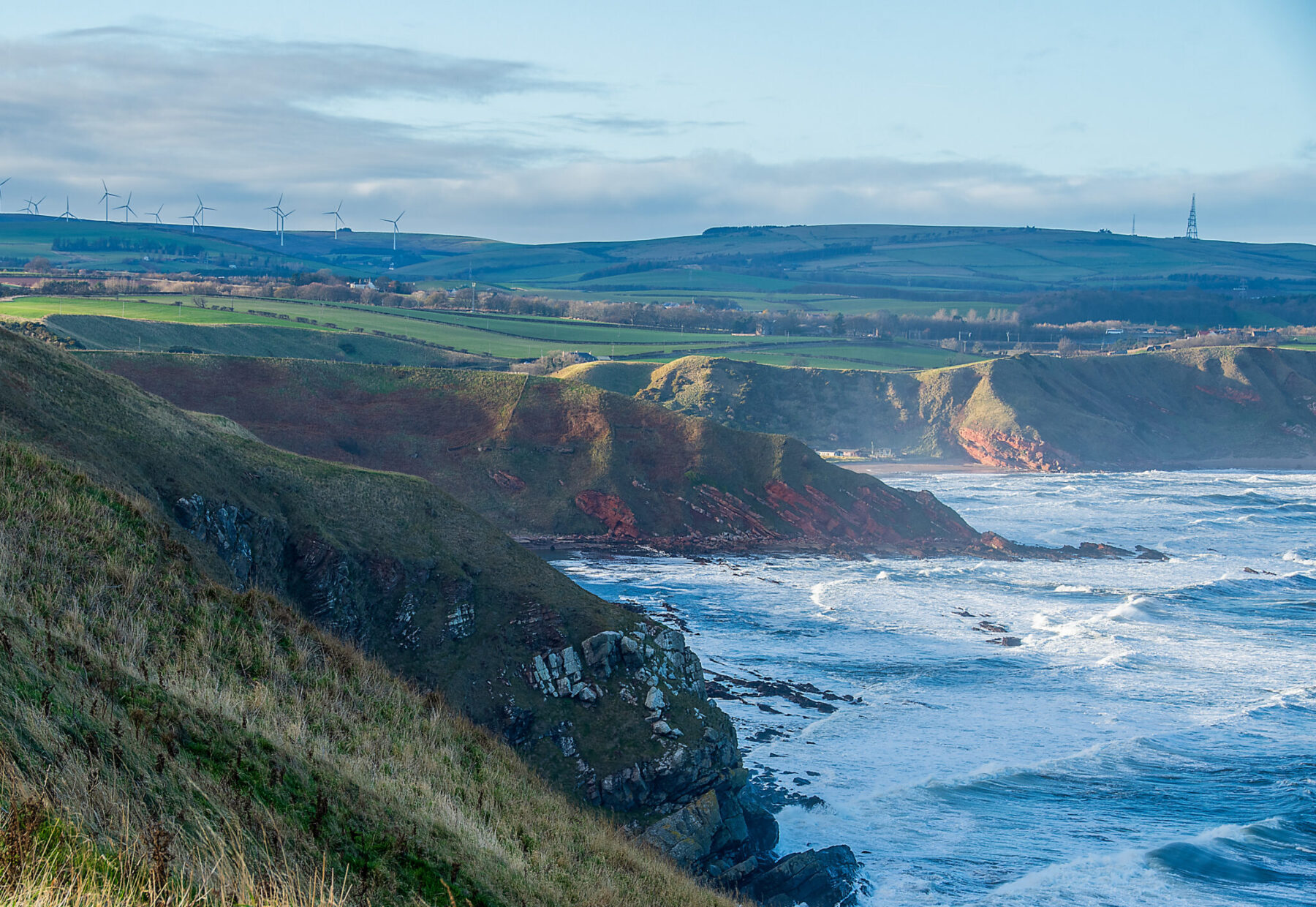
Siccar Point has a remarkable way of making geology real. A few years ago, I took my two sisters there, and afterwards one of them said, “Now we know why you wanted to be a geologist.” That reaction sums it up – it’s a place where the story of the Earth becomes clear in a way that’s hard to forget.
Have you noticed a growing curiosity about Scotland’s geology in recent years?
Absolutely. Edinburgh Geological Society is seeing strong membership, and the Scottish Geology Trust is attracting growing interest. We’re also receiving more invitations from local groups for talks and outings, which shows a real appetite for learning about Scotland’s geological story.
How do concepts like ‘deep time’ help us think differently about modern challenges like climate change?
Understanding deep time shows us just how dynamic the Earth has always been, and how climate has changed over vast timescales. That perspective should make it easier to recognise the scale and significance of the changes we’re seeing today. It’s frustrating that there is still denial, because geology provides such clear evidence of how the Earth works, and it’s an ideal subject for bringing together physics, chemistry and biology to explain it.
If Hutton were around today, what big questions do you think he’d be asking?
He would be thrilled by discoveries such as the role of radioactive heat within the Earth. I think he would be focused on finding more vestiges of the beginning and better understanding the distant future of our planet, while also looking closely at shorter-term changes, including climate change.
Are there any other hidden gems you’d recommend for Hutton enthusiasts to visit beyond Siccar Point during the tercentenary year?
It’s hard to pick just a few – Scotland itself could be considered one vast Geopark. From coastlines to mountains, there are extraordinary geological sites across the country waiting to be explored.
If you could sum up Hutton’s legacy in three words, what would they be?
Observe, interpret, prove.
The Siccar Point Deep Time Trail is now open to visitors and offers a unique opportunity to experience Hutton’s ideas in the landscape that inspired them. Standing at Siccar Point, where he recognised the immensity of geological time, brings his work to life in a powerful and immediate way. It’s a reminder of why Hutton’s legacy still matters: his commitment to observation, evidence and understanding how the Earth works underpins the science we rely on today.